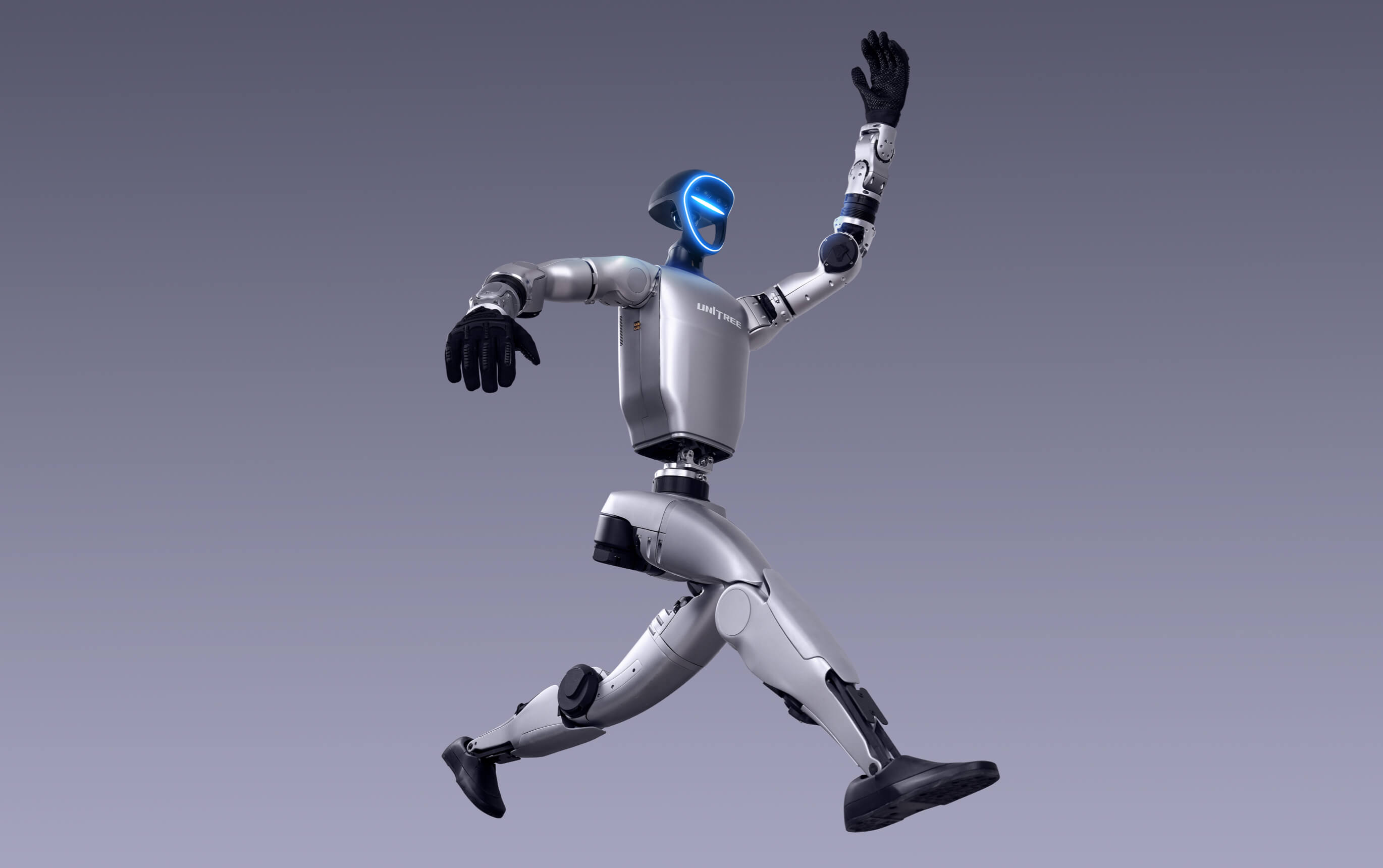
From the R1 EDU and G1 EDU to the H1 line, our team works alongside research labs and pilot teams on the integration, simulation, and security work that turns a Unitree robot into something a real workflow can rely on.
Unitree is one of the most accessible humanoid platforms in the field today. The hardware ships, the SDK is documented, and there is a real community working in MuJoCo and ROS. That accessibility is what makes it attractive to research teams — and it is also where most teams need help moving from a quadruped demo to a humanoid pilot.
Unitree publishes Python and C++ SDKs for the G1, R1, and H1, with ROS 2 bridges that work out of the box. Good starting point for teams that want to read the layers, not just call them.
From the entry-level R1 EDU up through the G1 EDU and the H1 line, there is a Unitree platform for most stages of a roadmap — whether you are building benchmarks, prototypes, or early pilots.
MuJoCo models for the G1 are widely used in the research community, and Isaac Sim support is improving. That makes sim-to-real iteration on a Unitree noticeably faster than on most closed platforms.
We work across the Unitree humanoid family. The application, simulation, and security layers we build are designed to carry between platforms, so a team that starts on an R1 EDU does not have to throw away its work when it moves to a G1 or an H1.
Compact biped · education & entry research
A small-footprint biped designed for classrooms, labs, and early-stage research projects. The most accessible way to start working with humanoid hardware.
Full-size humanoid · manipulation & mobility research
A widely adopted research humanoid with a published MuJoCo model and dexterous hand options. Strong fit for labs working on whole-body control, manipulation, and locomotion.
Full-size adult humanoid · pilot & production deployments
Unitree's larger humanoid line, sized for adult-scale tasks and longer duty cycles. Good candidate for early pilots in logistics, inspection, and structured industrial environments.
A lot of Unitree projects stall in the same place: the robot is on the bench, the SDK runs, but the team cannot reproduce real behaviour in simulation, or cannot get a clean controller stack onto the hardware. That bring-up gap is where most of our Unitree work happens today.
Six engagements that take a Unitree platform from delivery crate to a working pilot — whether the goal is a research benchmark on an R1 or an early industrial trial on an H1.
SDK install, network and CycloneDDS configuration, sensor calibration, and a verified ROS 2 baseline. Your team starts from a known-good system instead of debugging the box for a week.
Simulation harnesses for the G1 and R1, sim-to-real validation loops, and the training infrastructure underneath them. Built so your team can keep iterating after we are done.
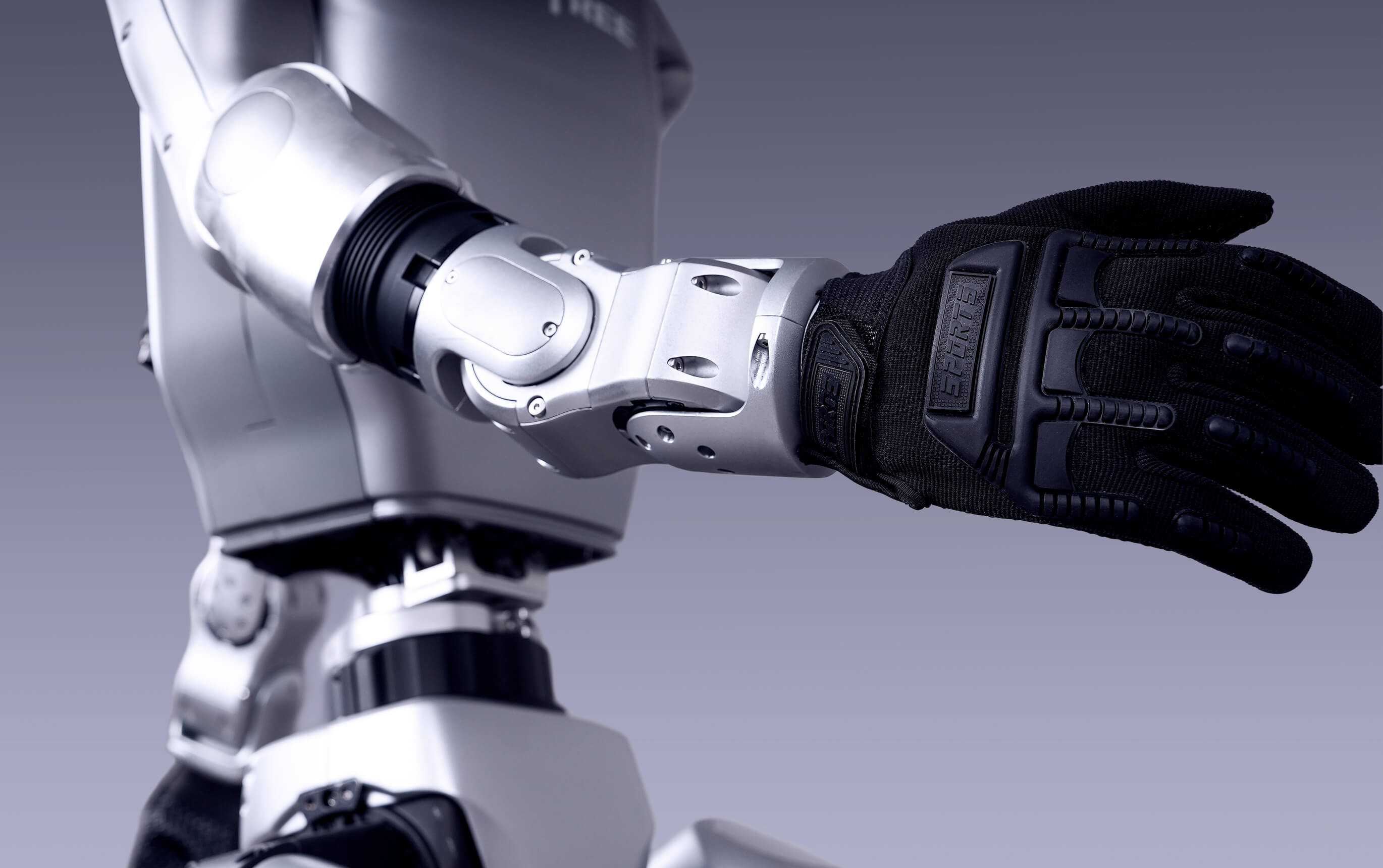
Whole-body control work, dexterous hand integration, locomotion tuning, and task primitives. We compose policies and safety envelopes into skills your team can actually trigger from an application layer.
Camera, depth, and LiDAR pipelines on the Unitree compute stack. SLAM, mapping, and waypoint navigation in indoor environments — tuned for the platform you are running.
Multi-robot orchestration, task management, OTA pipelines, and observability. Plus the application layer your team or operators actually interact with, instead of raw SDK calls.
Hardened update channels, identity for robots and operators, network segmentation, audit logging, and the compliance evidence work that pilots need before they can move into a production environment.
Our co-founder visited the Unitree team in China earlier this year and we are actively building an application and security services practice around the platform. We are not the manufacturer, and we are not claiming to know every layer of every robot in the lineup.
What we do bring is enterprise integration experience, a security-first engineering culture, and a team that is putting real hours into G1 and R1 bring-up, simulation, and skills work. If that matches what you are trying to build, we should talk.
Even a research humanoid sits inside a network, touches data, and operates around people. Our default is to engineer identity, encryption, segmentation, and audit logging in from the first sprint — not bolted on after a pilot becomes a production system.
Have a Unitree on the bench — or planning to buy one? Let's talk about what we can help with.
Book a Discovery Call →